
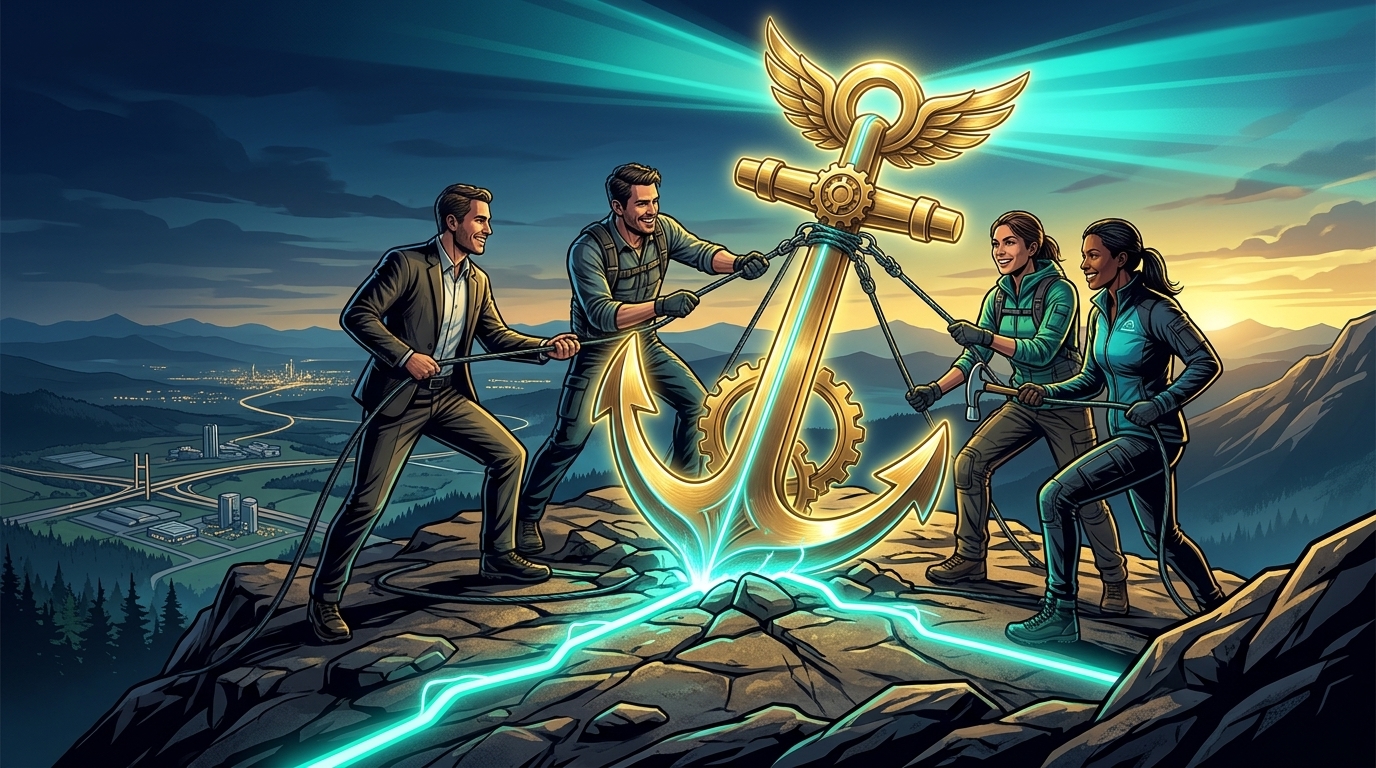
Here’s the thing most people get wrong about change: going live isn’t the finish line. It’s where the real work starts.
After launch, your people have taken their first steps into the new system. But those habits are fragile. If the sponsor disappears now, players quietly slip back to their old routines. Benefits erode. The change fades. That’s why the final stage of the journey is Quest 8: Reinforce the Quest.
The Quest Doesn’t End at Go-Live
Too many organizations treat implementation like a checkmark. “The system’s live, so we’re done.” That’s the fire-and-forget trap. It assumes that once people have been informed and trained, adoption takes care of itself.
It rarely does.
People understand the new process but still find the old one easier. Managers get pulled in other directions. Problems go unresolved. Frustrations spread through the grapevine and chip away at confidence. Quest 8 stops that drift. It keeps everyone engaged long enough for the new way to feel normal.
It All Starts with the Sponsor
The single most important thing in sustainment is continued sponsor commitment. A sponsor’s job doesn’t end at the kickoff or the launch event. They have to stay visible and stay engaged.
That means staying on the pulse: checking in with managers and local champions, listening to surveys and help-desk feedback, watching the adoption data, and spotting trouble early. It means removing barriers, providing coaching, and recognizing the people who are making it work.
When leaders keep talking about the change, use the new process themselves, and hold people accountable, the message lands: this isn’t a temporary initiative. It’s the new standard.
Four Ways to Keep the Momentum
Reinforcement isn’t one follow-up email. It’s an ongoing set of activities.
- Run victory debriefs. After each rollout wave, gather people and ask what worked, where they struggled, and what to fix next time. Debriefs turn experience into learning — and show people their feedback actually matters.
- Keep coaching. Some people need more help after go-live than before it. Offer refreshers, short videos, quick-reference guides, peer coaching, help-desk support, and office hours. Make it easy to get help at the moment it’s needed.
- Measure what matters. You can’t reinforce what you don’t observe. Track usage, completion rates, error rates, processing times, and progress toward the benefits you promised. Use the data to find where support is needed — not to point fingers. Low adoption might mean resistance, but it might also mean the instructions are confusing or people don’t have the access they need.
- Celebrate progress. Share early wins, recognize the teams that helped others adapt, and be specific about what they did and why it mattered. That gives everyone a model to follow.
Different Groups, Different Support
Not everyone needs the same reinforcement. Use the stakeholder landscape from earlier in the quest to guide you.
| Quest group | What they need |
| Vanguard (high influence, high impact) | Regular sponsor check-ins, direct coaching, detailed metrics, a seat at the table for big issues. |
| Sentinels (high influence, low impact) | Targeted updates, governance reporting, proof the risks are under control. |
| Frontline Explorers (low influence, high impact) | Local support, refreshers, office hours, peer help, practical job aids. |
| Bystanders (low influence, low impact) | Simple updates, on-demand resources, the occasional reminder. |
Hold the Line
Reinforcement needs both support and accountability. Support says, “We’ll help you succeed.” Accountability says, “This is how we work now.” If the old process stays available, people will use it whenever the new one gets inconvenient.
So retire the old tools and forms. Update the procedures and performance expectations. Fold the new process into regular management reviews. Make sure managers model the behavior. And address backsliding when it happens.
But don’t make accountability punitive by default. Pair it with a real effort to remove barriers. Before you decide someone won’t change, check whether they can’t — because of missing skills, unclear expectations, or unresolved problems.
When Is the Quest Complete?
Quest 8 is done when the change no longer needs extraordinary attention. You’re there when people use the new process consistently, managers reinforce it, support requests taper off, benefits show up in the data, and the old way is no longer the default.
The eight-quest journey is complete: Understand the Mission, Assess the Terrain, Map the Quest Roles, Understand the Quest Landscape, Design the Quest-Flow, Skill-Up the Quest Team, Launch the Quest Campaign, and Reinforce the Quest.
Here’s the lesson that matters most: change isn’t won at go-live. It’s won when people are supported long enough to make the new way their normal way.
Stay on the pulse. Clear the obstacles. Celebrate the progress. Hold the line.
That’s how a quest becomes the new normal.
👉 Download the full “Change Quest” eBook now to discover step-by-step frameworks for turning change management into an engaging, quest-driven success.


