
When we picture retirement, most of us imagine a well-earned finish line—a time for travel, hobbies, and spending unhurried days with family. But for many of us, persistent inflation and rising living costs are turning that peaceful vision into a multi-stage marathon.
The good news? We aren’t alone in this, and we aren’t powerless. By looking at how retirement affordability compares globally—and exploring practical, creative solutions right here in Canada—we can protect our financial independence without giving up the lifestyle we worked so hard to build.
1. The Big Picture: How Retirement Affordability Compares
It helps to put our situation in perspective. Global data shows that seniors everywhere are feeling the squeeze, though the local reality varies widely:
Senior Poverty Rates Across the Globe
Data from the OECD Income Distribution Database looks at relative senior poverty (households living on less than half the national median income):
- Where Pressure Is Highest: South Korea tops the list with a 39.8% senior poverty rate, largely because their public pension system wasn’t established until 1988. The Baltic states (Latvia at 34.3%, Estonia at 29.8%, and Lithuania at 25.9%) also face high relative poverty.
- Our Neighbors to the South: The United States ranks 7th among OECD countries, with 22.9% of seniors aged 66 and older living below the poverty line.
- Where Canada Stands: Fortunately, Canada fares better than many G7 peers. Our senior poverty rate hovers near 12%—placing us in a much stronger position than the U.S. (22.9%), the U.K. (15.0%), and Germany (14.5%), though we still trail Nordic countries like Norway (3.2%), which boast extensive safety nets.
What Does a Comfortable Retirement Cost?
Modelling by NetCredit and Numbeo estimates what a comfortable ~15-year retirement nest egg looks like around the world:
- Top Price Tags: Singapore leads as the most expensive place to retire at $1.1 million USD, followed by Switzerland ($859K USD) and the U.S. ($738K USD).
- Canada’s Global Ranking: Canada ranks as the 15th most expensive country at roughly $598,000 USD (about ~$800,000 CAD). Retiring here is somewhat more accessible than in the U.S. or U.K., but significantly higher than in traditional warm-weather havens like Costa Rica or Mexico ($356K USD).
2. Re-entering the Workforce: Why Traditional Hiring Isn’t the Answer
To stretch their savings, many older adults are stepping back into the workplace. Statistics Canada reports that 10% of Canadians aged 55 and older who had previously retired returned to work in 2023, up from 7% in 2019.
However, many of us quickly realize that traditional job hunting isn’t quite what it used to be:
- Longer Job Searches: StatCan data shows that unemployed workers over 55 stay out of work twice as long as younger job seekers, often encountering subtle ageism or rigid hiring processes.
- Bypassing the Corporate Ladder: Rather than dealing with resume black holes or rigid schedules, many seniors are choosing to bypass traditional employment entirely.
- The Self-Employment Shift: StatCan notes that 33% of retirees who go back to work choose self-employment. Working for ourselves gives us control over our time, lets us set our own hours, and eliminates hiring friction.
3. Smarter Cash Flow: Putting Assets to Work Instead of Working Harder
While self-employment gives us autonomy, an innovative group of retirees is taking a different route: shifting away from active labor altogether and adopting passive side hustles.
Instead of trading our time or physical energy for a hourly wage, we can put high-value assets we already own to work to generate steady, reliable income.
Popular Ways Seniors Are Monetizing Assets
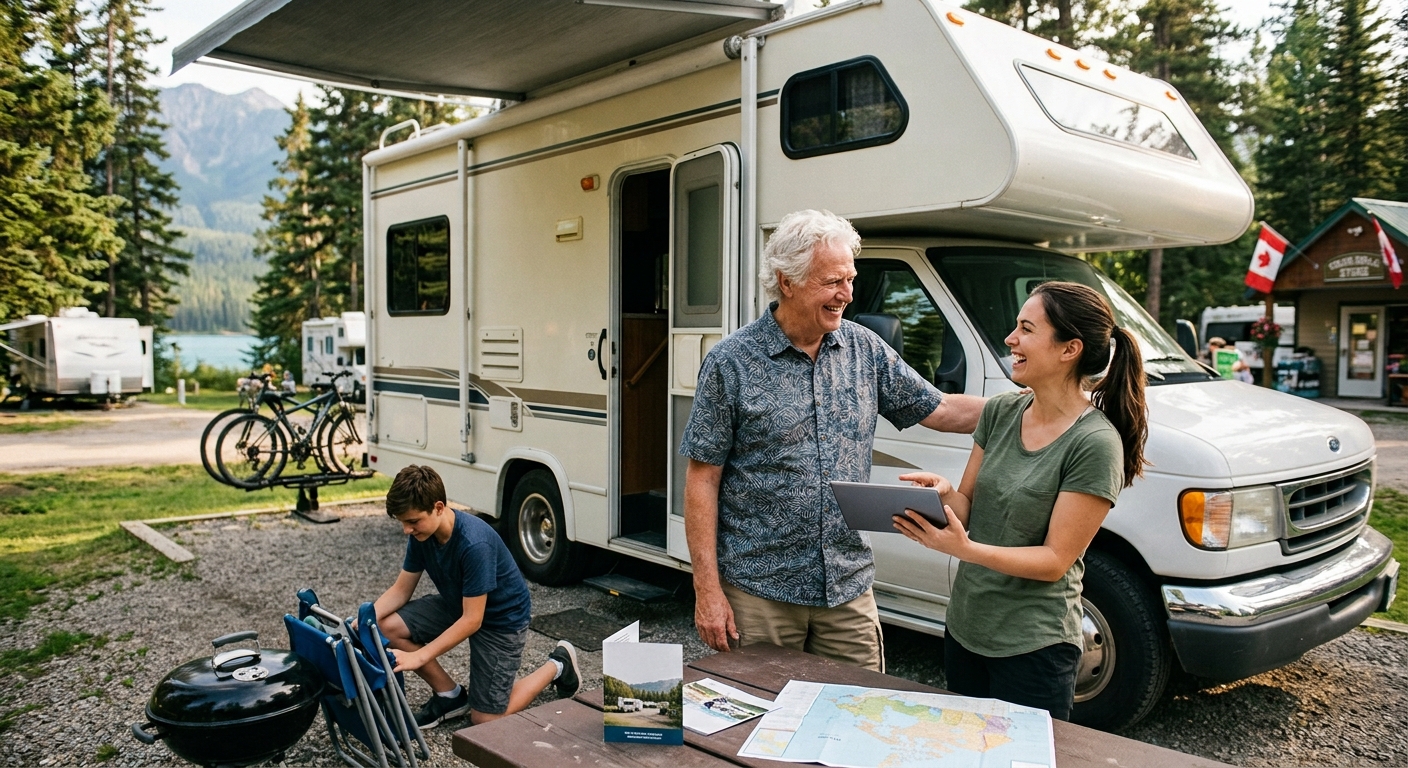
- Renting Out Idle RVs or Motorhomes: If you have a travel trailer or motorhome sitting in the driveway between family trips, peer-to-peer platforms like RVezy make it easy to host renters. Top listings can generate substantial seasonal earnings (up to $32,000), and established platforms provide built-in insurance, liability coverage, and 24/7 roadside assistance so you don’t have to worry if something goes wrong.
- Short-Term Property & Room Rentals: Homeowners are increasingly turning to platforms like Airbnb to host a secondary suite, a vacation cottage, or even a spare bedroom. In fact, older adults represent one of the fastest-growing host demographics on short-term rental networks, turning empty space into monthly cash flow.
- Monetizing Extra Storage or Parking: If you have an unused garage, shed space, or extra parking spot, local neighborhood platforms allow you to rent them out for storage with virtually zero daily effort.
- Partnering with Family: If managing online listings or handling guest turnarounds sounds like a hassle, consider setting up a family venture. Partnering with adult children or grandchildren allows them to handle the tech and physical upkeep while you split the earnings.
4. Keeping What You Earn: Smart Planning and Government Benefits
Generating extra income is great, but as Canadian retirees, we also need to protect our government benefit buffers.
- Watch the GIS Thresholds: If you receive the Guaranteed Income Supplement (GIS), keep in mind that net personal income above baseline exemption limits faces a 50% clawback rate.
- Maximize Business Expense Deductions: Income from asset rentals counts as rental or business income. You can deduct legitimate operational expenses—such as platform fees, maintenance, repairs, cleaning, utilities, and depreciation. Lowering your net taxable income keeps more money in your pocket and protects your GIS or Old Age Security (OAS) benefits.
- Consider Deferring Pension Payouts: If passive earnings cover your day-to-day needs, deferring your Canada Pension Plan (CPP) or OAS payments up to age 70 increases your guaranteed lifetime payout by 8.4% per year deferred.
What’s Next
Navigating retirement today isn’t about sitting back and hoping fixed pensions cover everything—it’s about actively managing our cash flow with confidence. While Canada offers a solid foundation compared to much of the world, higher living costs mean many of us need an extra financial cushion.
Asset-based side hustles give us a practical, dignified middle ground. We get to supplement our income without punching a clock, taking on physical strain, or answering to a boss.
Practical Takeaways for Moving Forward:
- Take Inventory of What You Own: Look around your home, driveway, or property. What assets are sitting idle for weeks or months at a time?
- Run the Numbers Like a Small Business: Calculate your true net profit by tracking every overhead expense—from platform commissions and cleaning costs to maintenance and taxes.
- Protect Yourself First: Stick to verified platforms that offer complete liability coverage, guest verification, and insurance protections.
- Make It a Family Effort: Involve adult children or family members to handle physical tasks or digital management, turning asset rentals into a fun, shared family venture.


