
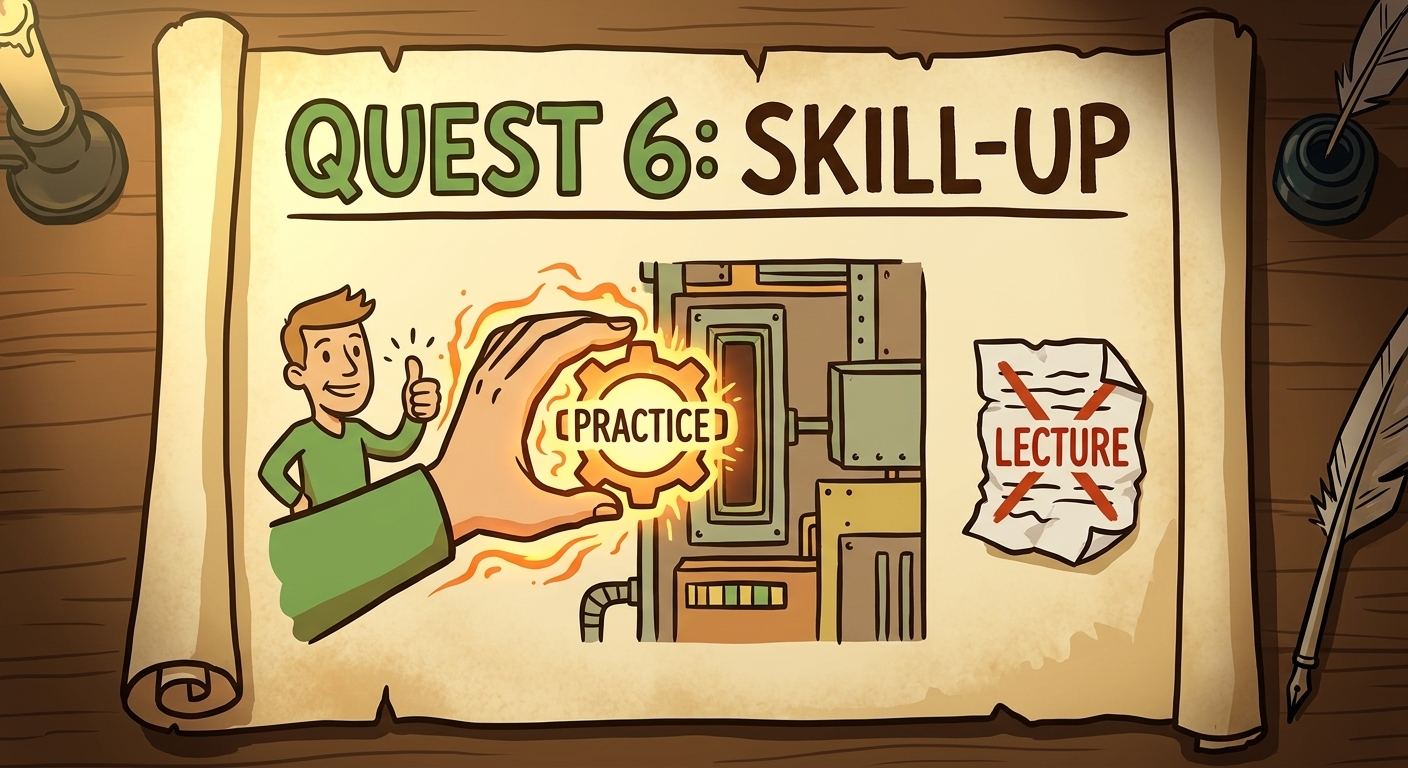
Let’s be real about what passes for training at work today: a mandatory, 90-minute slide deck presentation with 300 muted people on a video call, or an annoying online module where everyone just clicks “Next” as fast as possible.
Companies call it “training,” check the box on their project plan, and then wonder why—three weeks later—nobody knows how to do their job and everyone is quietly going back to their old ways of doing things.
If your team is struggling to adapt to a big change, Quest 6: Skill-Up the Quest Team offers an important reality check: Training isn’t just showing a slide deck. Hands-on practice is the next big step in gamifying change management to make it genuinely effective, engaging, and memorable.
Knowing What to Do vs. Being Able to Do It
When a company introduces a new tool or process, leaders usually think employees just lack information: “They just don’t know what the new system does.” So, they send out more emails, hand out 40-page guides, and run long, boring webinars.
In reality, most big changes fail because of a skill gap: “Employees understand what the goal is, but they lack the practice and confidence to actually do it when it counts.”
- Knowledge is knowing that a new software exists and why the company bought it.
- Skill is being able to log in and complete a complex assignment in two minutes without panicking when something goes wrong.
You can’t build real skills by dumping more facts onto people. You build skills by giving them a place to practice.
Why Practice Matters More Than Explanation
Think about how modern video games teach you how to play. They don’t make you read a huge manual before you start. They drop you into a simple tutorial level, hand you a controller, and show a quick prompt: “Press X to jump. Now try crossing that pit.”
Organizations usually do the total opposite: they give endless lectures before letting anyone touch the controls.
Gamifying this process flips the script. People learn best by doing things, thinking about how it went, and trying again—not by sitting quietly and listening to a talk.
- Explanations give you basic awareness (which you quickly forget).
- Practice builds muscle memory, lowers stress, and makes you feel comfortable trying.
When employees get to test out new systems in a safe, risk-free space before the official launch, their fear turns into confidence. They aren’t just memorizing steps; they are overcoming their fear of the new tool.
What Good Training Actually Looks Like
So, what does great, gamified training feel like on the ground? It feels less like a boring classroom lecture and more like leveling up in a game:
| Old-School Training | Modern “Skill-Up” Experience PDF |
| One-Size-Fits-All: Giant presentations for hundreds of people at once. | Custom Skill Paths: Training made specifically for your actual job role. |
| Passive Watching: Staring at someone else sharing their screen. | Hands-On Practice: Interactive test environments where you do real tasks. |
| Information Overload: Long slides covering every rare problem that might happen. | Bite-Sized Modules: Short videos and simple, step-by-step cheat sheets. |
| “One and Done”: Training stops the day the tool goes live. | Ongoing Help: Teammate coaching, open Q&A sessions, and local experts. |
Great training respects people’s time. It gives teams simple videos, easy quick-start guides, and helpful support designed around the problems they face every day.
The Takeaway
If you want people to adapt to a big change, stop giving them long lectures about what is changing. Hand them the controls, set up a safe space to practice, and give them time to build their skills before the real work begins.
You don’t get better at something by sitting on the sidelines—you get better by playing.
Ready to Gamify Your Next Change Initiative?
Don’t let your next rollout get stuck in endless slide decks. Level up your change strategy by downloading the complete guide!
👉 Download the full “Change Quest” eBook now to discover step-by-step frameworks for turning change management into an engaging, quest-driven success.

 Life Horizons