
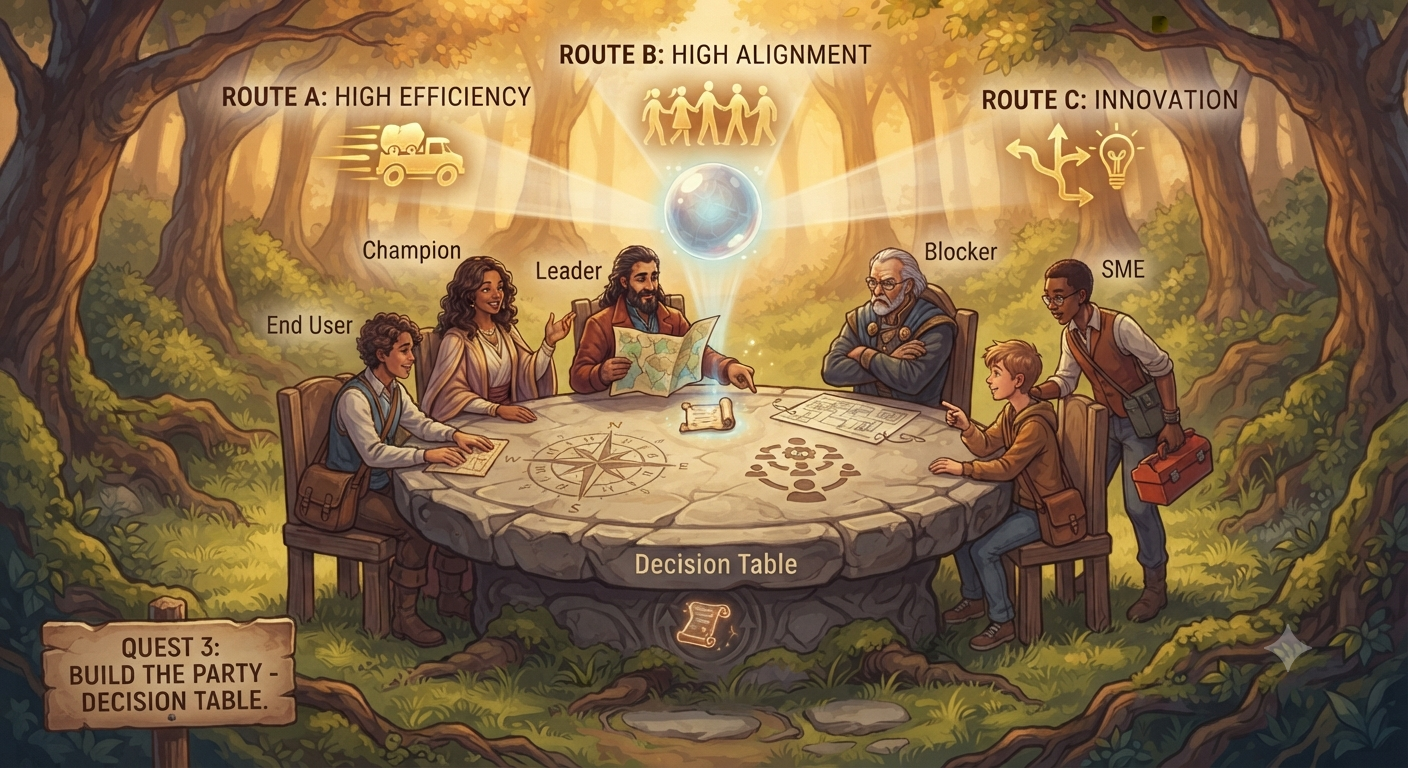
Knowing your mission and reading the terrain are critical first steps, but even the clearest plan on the safest ground won’t move itself. Change doesn’t happen on paper—it moves through people.
In Quest 1, we defined the mission to give our change shape. In Quest 2, we assessed the terrain to reveal hidden organizational risks and fatigue. Now, with the map drawn and the environment understood, we reach the most critical element of the journey: assembling the people who will make the trip.
Welcome to Quest 3: Build the Party.
Some are directly affected. Some influence those who are affected. Some support the effort quietly in the background. Others are completely invisible to leadership, yet they are essential to whether the transition succeeds or fails.
That is why comprehensive stakeholder mapping must happen before you build your strategy. If you don’t know who is in the party, you can’t plan the journey.
Why the Party Matters
In quest language, the party is the collection of individuals who will travel through the change together. They won’t all play the same role, but they are all part of the exact same journey.
Too often, corporate change management treats stakeholders as mere names on a spreadsheet. But a name is just a starting point. What matters is the role that person plays in the ecosystem:
- The Champions: Driving momentum and belief.
- The Blockers: Raising friction, whether out of fear, fatigue, or valid operational concerns.
- The End Users: Navigating the day-to-day impact.
- The Subject Matter Experts & Support: Keeping the machinery running behind the scenes.
- The Indirectly Affected: Teams downstream whose daily work will shift in quiet ways.
If you miss the role, you miss the reality. Quest 3 isn’t about compiling a contact list; it’s about mapping the human structure of the change.
Why Lists Matter First
A comprehensive stakeholder list might seem basic, but it is the foundational tool for the entire process.
Before you draft a single communication plan or design a training deck, you need to know who might be impacted, who holds informal influence, where resistance will live, and who can move the work forward.
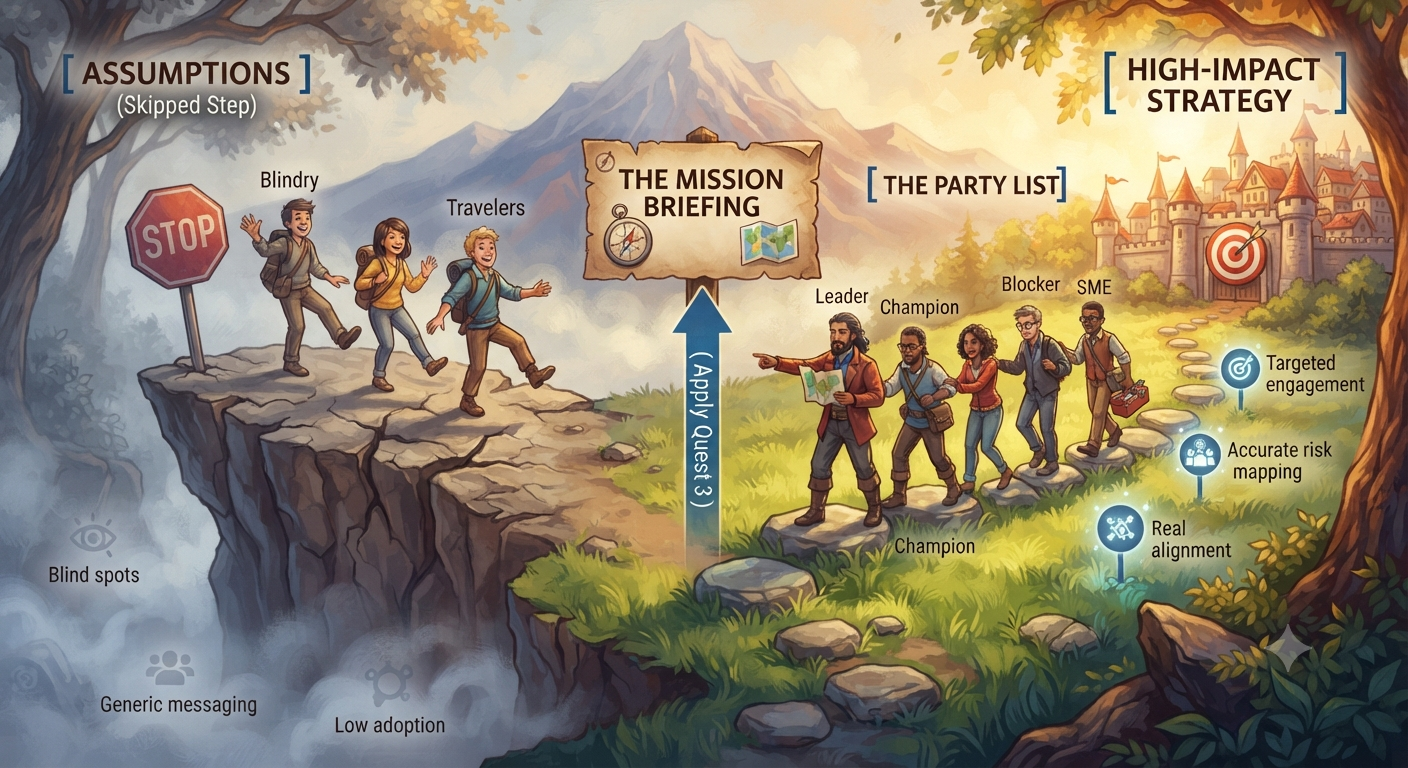
Without that list, everything else is guesswork:
- Communications become vague and generic.
- Risk assessments leave major blind spots.
- Training plans completely miss critical operational groups.
- Sponsors are asked to advocate without knowing who they are speaking to.
The list isn’t the strategy—it is the foundation upon which every successful strategy is built. Skip it, and you’re building on assumptions.
Stakeholders Are Roles, Not Audiences
One of the biggest mistakes in change leadership is treating stakeholders as if they are a single, monolithic audience.
They are not.
Different roles require entirely different approaches:
- Some need to be informed with high-level context.
- Some need to be consulted to capture operational realities.
- Some need to be managed closely through high-touch engagement.
- Some are hidden influencers who shape sentiment off the record.
- Some are the front-line operators who do the work every day but are almost never brought into the planning room.
When we reduce all of these distinct groups to a generic “impacted audience,” we lose critical insight. Each role contributes something vital to the journey.
Who Gets Missed (And Why It Costs You)
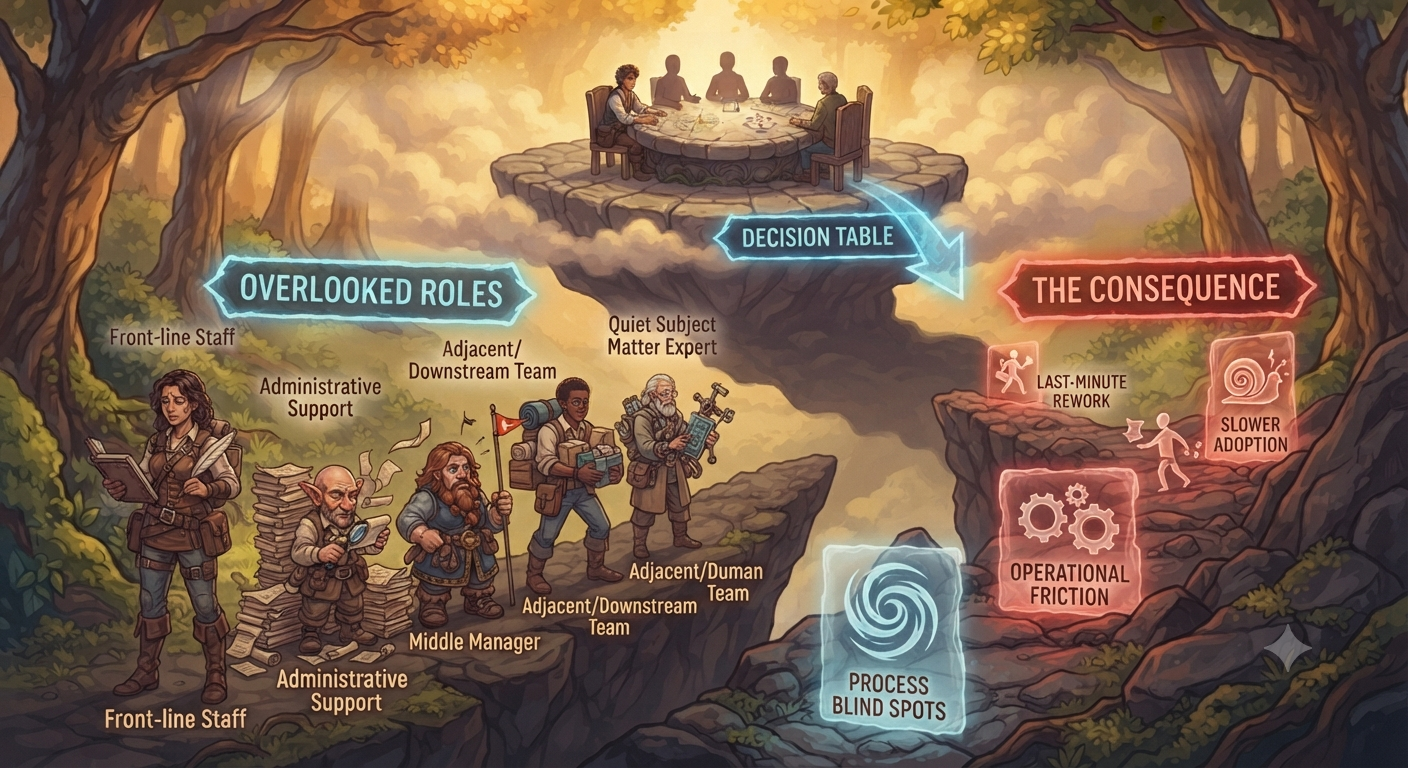
When stakeholder mapping is rushed, the people most likely to be left behind are often those closest to the actual work:
These overlooked individuals carry the day-to-day consequences of the transition. They see process gaps long before executive leadership does. While they may not have formal authority, they have ultimate veto power over whether a change actually works in practice.
If they aren’t included early, you discover too late that the plan doesn’t match operational reality. That creates avoidable friction, resistance, and expensive rework.
The Right Sequence
The sequence of the 8-step Change Quest method is deliberate:
- Quest 1: The Mission Briefing (Define what is changing)
- Quest 2: Assess the Terrain (Understand the environment & risk)
- Quest 3: Build the Party (Identify the people who will travel)
If you build the party too early, you don’t know enough about the change to identify who is truly affected. If you build it too late, you’ve already missed key voices in your strategic design.
Quest 3 sits right at the sweet spot: after the mission and terrain are clear, but before strategy, communication, or training are finalized.
Ready to assemble your party?
Change doesn’t happen on paper; it happens through people. Every blind spot in your stakeholder map is a risk waiting to manifest downstream. Once you know who is in the party, the next step is to analyze the broader landscape of relationships, influence, and engagement. That is Quest 4: Understand the Landscape.
Download the complete Change Quest framework for free to access practical stakeholder mapping templates and role alignment guides.
[Download the free Change Quest e-book here]
Which stakeholder group do you find gets overlooked most often in major organizational changes? Let’s discuss in the comments.

 Life Horizons