
They say if you don’t like the weather in Canada, just wait five minutes. But nobody warns you about what happens when five minutes of a downpour turns into a historic deluge.
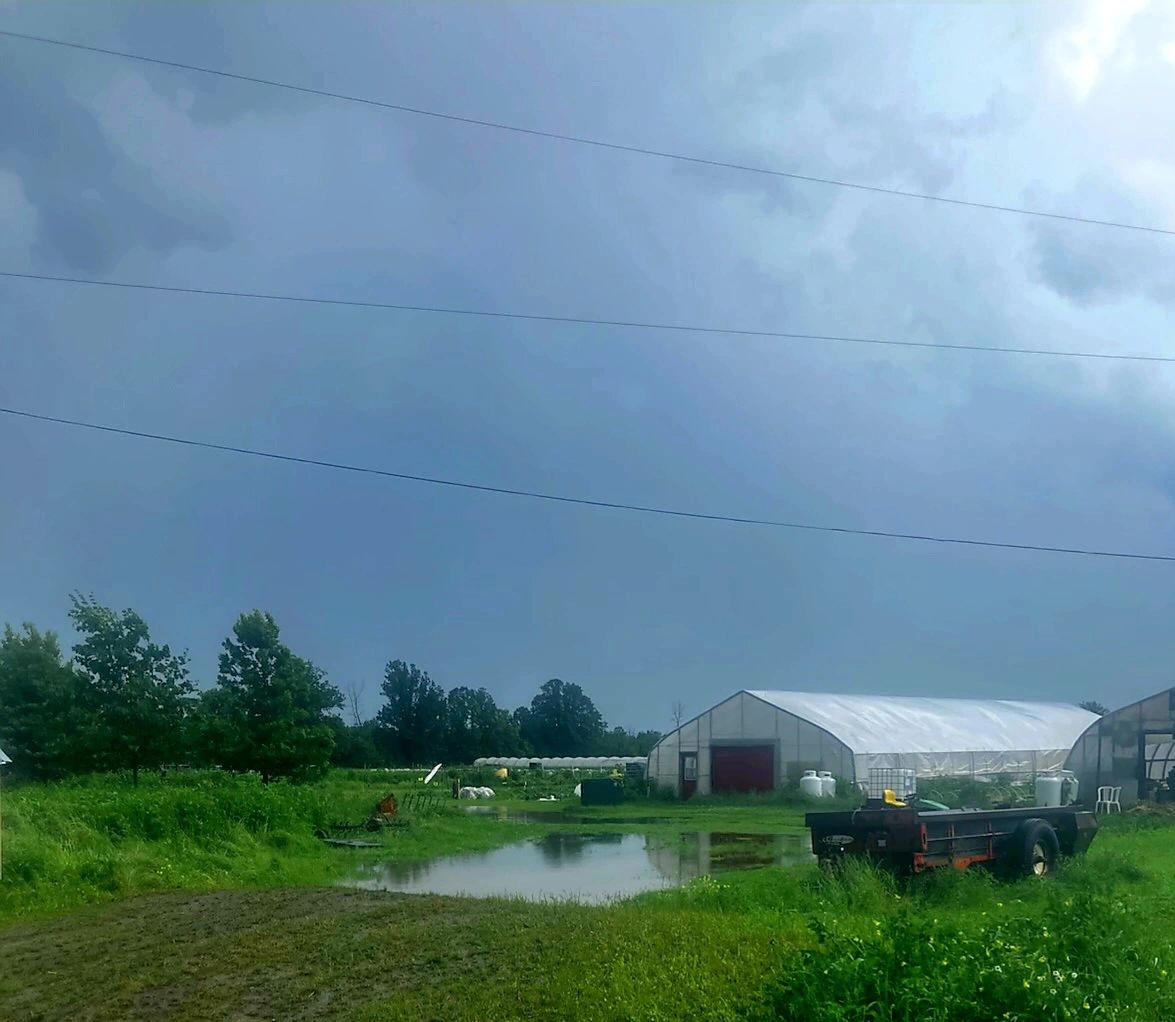
Yesterday, Ottawa was hit with a staggering 118mm of rain—officially marking it as the second-highest daily rainfall on record for the city. For most people, it meant a ruined commute, cancelled patio plans, and a mad dash from the parking lot to the front door. But for us on the farm, watching the sky open up like that felt like watching the rules of our entire week being rewritten in real-time.
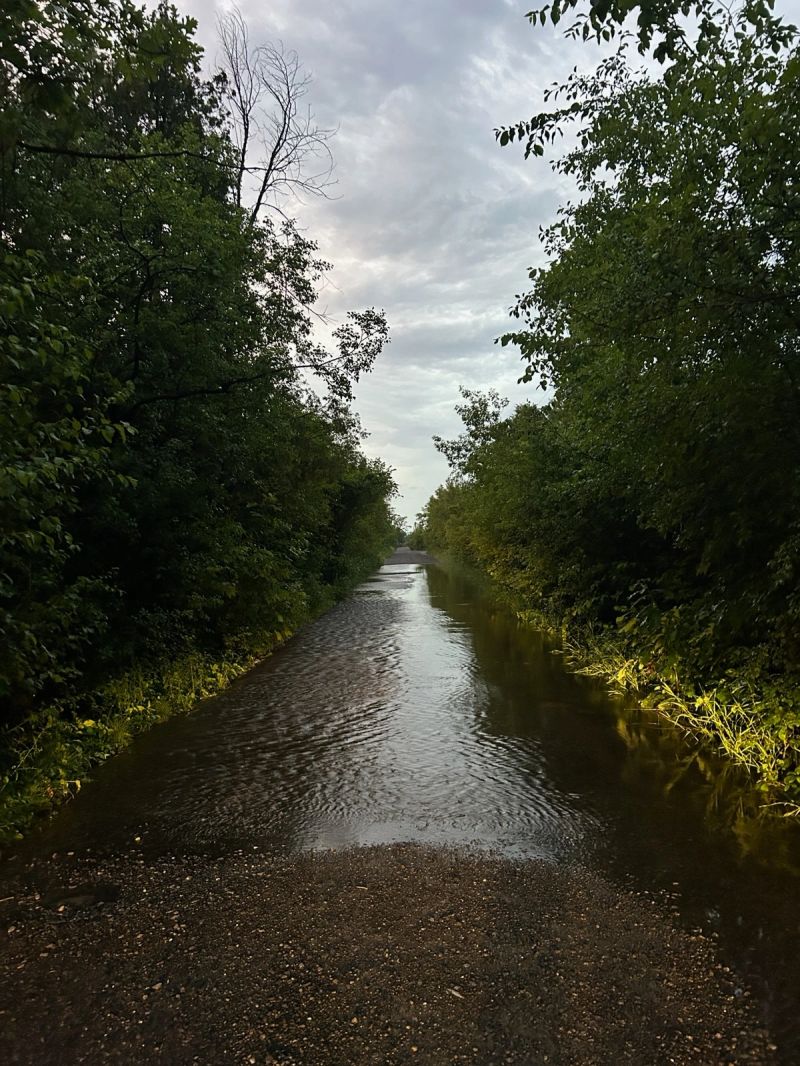
Right now, looking out the window, the farm is completely flooded. Fields that yesterday were neat, promising rows of green are now looking more like a network of impromptu lakes.
The Instant Shift: From Growing to Saving
In an instant, the entire trajectory of our week evaporated. That is the brutal, beautiful, and deeply humbling reality of working with nature—and honestly, of life in general. Changes don’t always give you a two-week notice; they occur suddenly and severely.
Our original workplan for the week was focused entirely on growth and maintenance:
- Tending to young crops
- Weeding and prepping new beds
- Fine-tuning our irrigation (ironic, isn’t it?)
- Standard mid-summer harvesting
Today? That plan is officially in the compost bin. We have pivoted entirely from a mindset of growing the crops to saving the crops.
Instead of nurturing future yields, our immediate hours are filled with digging emergency drainage channels, assessing root damage, checking on infrastructure, and figuring out what can actually be salvaged from the mud. It is exhausting, muddy, and incredibly stressful.
The Change Management Reality: Predictable Risks vs. Black Swans
In any professional setting, standard change management frameworks teach us to build robust risk registers. We look ahead, predict potential bottlenecks, and map out neat mitigation plans. On a farm, you anticipate predictable risks: a late frost, a common pest, or a typical dry spell. You build a plan for those.
But then there are Black Swan events—a term popularized by statistician Nassim Nicholas Taleb to describe unpredictable, high-impact events that catch everyone completely off guard.
A historic, infrastructure-destroying 118mm downpour is a textbook Black Swan. No standard mitigation plan accounts for your fields turning into a lake overnight. When these anomalies hit, your static, pre-written crisis manuals become useless.
The True Measure of Resilience: When an unpredictable crisis shatters your standard processes, your survival relies entirely on human infrastructure—the adaptability of your teams and the strength of your networks.
When plans fail, responsive networks take over. On our farm, that looks like a team that doesn’t need a top-down command to start moving; everyone inherently knows how to communicate, self-organize, and look out for vulnerable areas. Beyond our borders, it’s the network of neighboring farmers checking in, sharing heavy equipment, or offering extra hands. A spreadsheet can’t solve a Black Swan event, but a deeply connected, agile team can.
The Art of the Pivot: 3 Lessons in Resiliency
Successfully navigating an unpredictable crisis requires a specific mental toolkit. You can’t stop the rain, but you can control how you react once the storm passes.
1. Ditch the Denial, Face the Mud
When a crisis hits, it is incredibly easy to fall into the trap of “wishful thinking.” You waste valuable time wishing it hadn’t rained so hard. Resiliency starts with radical acceptance. The field is flooded; the situation is what it is. The sooner you accept the new reality, the sooner you can start fixing it.
2. Ruthless Reprioritization
You cannot do everything you originally planned. You have to triage. What needs our attention right this second to prevent total loss? On the farm right now, that means protecting the high-value, vulnerable crops first and letting the hardier varieties fend for themselves.
3. Keep Your Agility Intact
Rigid structures break under pressure; flexible ones bend. Having the ability to quickly pivot means not tying your ego to the original plan. A good plan is a guide, not a prison sentence.
Moving Forward (Where Are My Boots?)
There is a unique kind of quiet that settles over a flooded farm. The adrenaline of the storm is gone, and you’re left looking at a lot of hard work ahead. But there’s also a strange sense of community and determination that kicks in.
Nature reminded us yesterday who is ultimately in charge. But today, we get to remind ourselves what a well-connected, resilient team is capable of handling. It’s going to be a long, wet, and incredibly messy week, but the crops that survive will be all the sweeter for it.
Now… where did I leave my tall boots? We’ve got work to do.


