
Busy working adults juggling deadlines, commutes, caregiving, and travel run into the same daily health obstacles: too little time, too much stress, and too many competing wellness opinions. The core tension is simple, health habits are treated like a separate project, yet time management and wellbeing are already tangled into every meeting, meal, and sleep-deprived morning. Add self-improvement barriers like perfectionism, guilt after missed routines, and the belief that progress requires a full lifestyle overhaul, and consistency collapses fast. With a clearer framework for stress management for working adults, wellness stops feeling like another job.
Understanding Holistic Wellness for Busy Adults
Holistic wellness means caring for the whole person, not chasing one perfect habit. A simple way to think about it is the state of complete physical, mental and social well-being, where your body, mind, and relationships influence each other every day. When you treat stress, sleep, food, and movement as connected, progress becomes steadier.
This matters because work pressure can quietly cancel out “good” choices. You can eat well and still feel drained if late emails wreck your sleep, or if constant urgency keeps your nervous system on high alert. Integrated habits reduce that hidden friction and make health easier to maintain on real schedules.
Think of it like a phone with multiple apps running. Closing only one app helps, but battery drain continues if background tasks stay on. Career stress often acts like that background drain, so you fix it alongside nutrition, sleep, and recovery.
Habits That Calm Stress and Build Daily Health
When your calendar is full, consistency beats intensity. These small routines reduce decision fatigue and give you steady wins in stress, sleep, food, movement, and mindset so you can build momentum without overhauling your life.
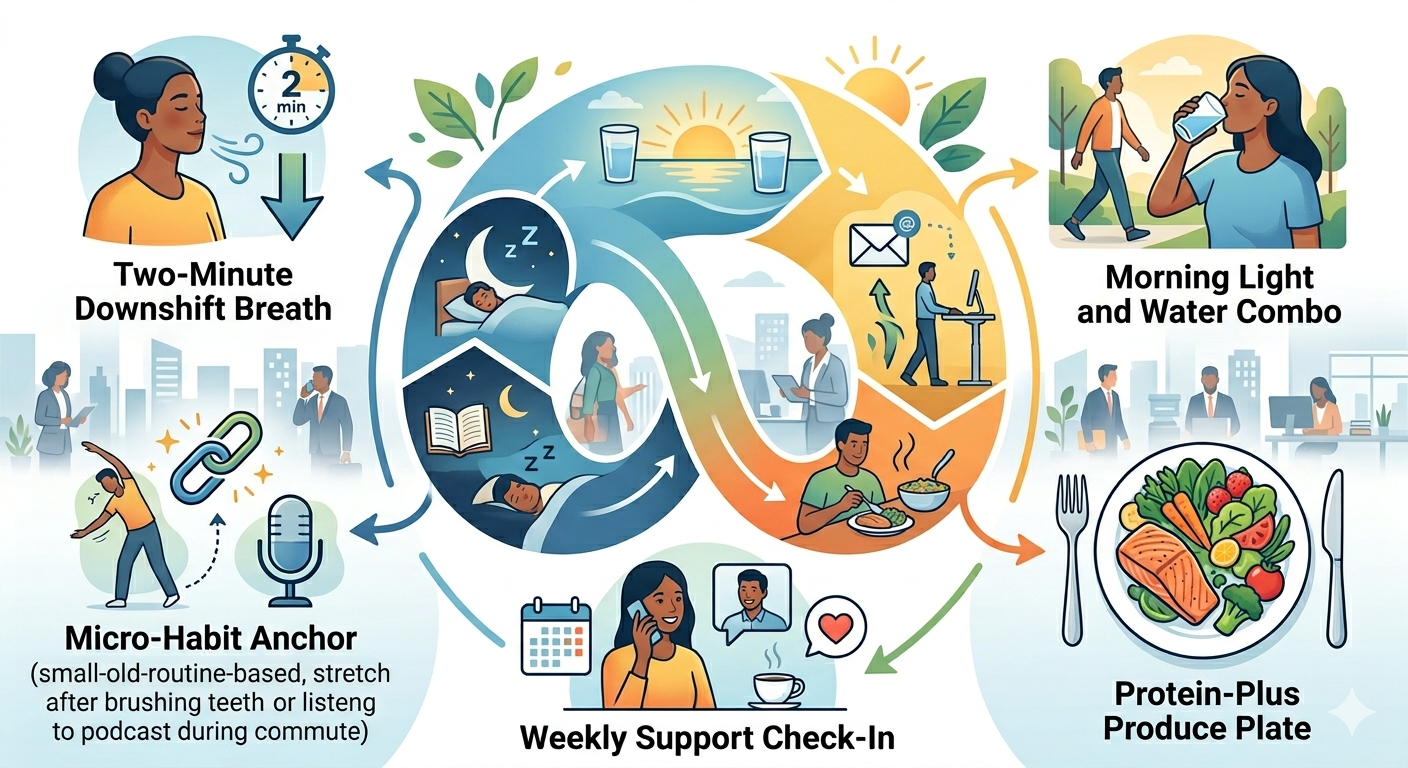
Two-Minute Downshift Breath
- What it is: Do 6 slow breaths, extending your exhale each time.
- How often: Daily, before sleep or after tense meetings.
- Why it helps: It cues your body to exit fight-or-flight faster.
Morning Light and Water Combo
- What it is: Step outside for 2 minutes, then drink a full glass.
- How often: Daily, within 30 minutes of waking.
- Why it helps: It supports alertness and reduces sluggish, snacky mornings.
Micro-Habit Anchor
- What it is: Use small manageable actions attached to an existing routine.
- How often: Daily, paired with coffee, brushing teeth, or logging in.
- Why it helps: It lowers friction so the habit actually sticks.
Protein-Plus Produce Plate
- What it is: Add one protein and one colorful plant to each meal.
- How often: Daily, at two meals minimum.
- Why it helps: It steadies energy and reduces stress-driven grazing later.
Weekly Support Check-In
- What it is: Schedule one supportive touchpoint, including a therapy appointment.
- How often: Weekly, same day and time.
- Why it helps: It builds resilience before stress becomes a crisis.
A Simple Rhythm You Can Repeat Every Week
This workflow turns wellness into a light planning practice, not another task to perfect. It helps busy adults fit fitness scheduling strategies, meditation practice benefits, and a healthy home environment into real days, while protecting energy through setting personal boundaries. Most importantly, it builds in a checkpoint for chronic work stress assessment so you can spot patterns early and respond. This is especially useful for working adults navigating career barriers or looking to advance their education; take a look here to learn more about how online universities can help reshape workplace realities without the stress.
| Stage | Action | Goal |
| Clarify | Pick one focus for body, mind, and schedule | One clear priority, less mental clutter |
| Plan | Block two short workouts and two calm minutes | Balanced wellness routine on your calendar |
| Prepare | Set out gear, tidy one surface, stock simple food | Healthy home environment supports follow-through |
| Protect | Choose one boundary for email, meetings, or family time | Fewer stress spikes and better recovery |
| Review | Note wins, friction points, and stress triggers weekly | Chronic work stress assessment without spiraling |
| Adjust | Shrink, swap, or reschedule the next week’s actions | Consistency returns quickly after disruptions |
Clarify and plan create direction, while preparing and protecting remove the most common friction. Review keeps you honest about what is draining you, and adjusting makes the system resilient instead of rigid. Start small, repeat often, and let the rhythm carry you.
Wellness FAQs Busy Adults Actually Ask
Q: What should I do when I fall off my routine for a week (or three)?
A: Treat it like a reset, not a failure. Restart with the smallest “minimum version” you can repeat for 3 days, like a 10-minute walk or 2 minutes of breathing. Then remove one obstacle that tripped you up, such as unclear timing or an overloaded evening.
Q: How can I stay consistent when motivation disappears?
A: Build around cues, not willpower: same time, same trigger, same tiny action. It also helps to remember that an average being 66 days is common for habits to feel automatic, so early effort is normal. Track consistency with checkmarks, not intensity.
Q: When my healthy habits stall, what’s the first thing to adjust?
A: Adjust the size before you change the goal. Cut the habit in half, make it easier to start, or move it earlier in the day when decision fatigue is lower. If it still feels heavy, swap in an equivalent option you will actually do.
Q: Can I improve my wellness without changing my whole schedule?
A: Yes, focus on “anchors” you already do, like coffee, commuting, or bedtime. Attach one small upgrade to one anchor, such as prepping lunch while coffee brews or stretching after brushing teeth. Small, consistent actions beat occasional big efforts.
Q: Should I prioritize wellness if I’m in a career transition and everything feels uncertain?
A: Yes, but keep it gentle and stabilizing: sleep, simple meals, and short movement are your foundation. Many workplaces are trying to support well-being, and companies in 2025 often have a formal wellness program you can use without extra planning. Choose one boundary that protects your bandwidth while you navigate change.
Build Daily Resilience With One Sustainable Wellness Habit
When life is packed, stress climbs and even good intentions can slide into on-and-off routines. The steady path is the one this guide has emphasized: consistent self-improvement strategies rooted in self-compassion, simple structure, and sustainable lifestyle changes. Applied consistently, those small moves reduce decision fatigue, strengthen long-term habit formation, and create lasting wellness motivation you can actually feel day to day. Small, consistent habits beat occasional perfect weeks. Choose one next 1% upgrade and track it with reflective health journaling for 30 days. That practice builds the stability and resilience that support better health, focus, and connection over time.


