
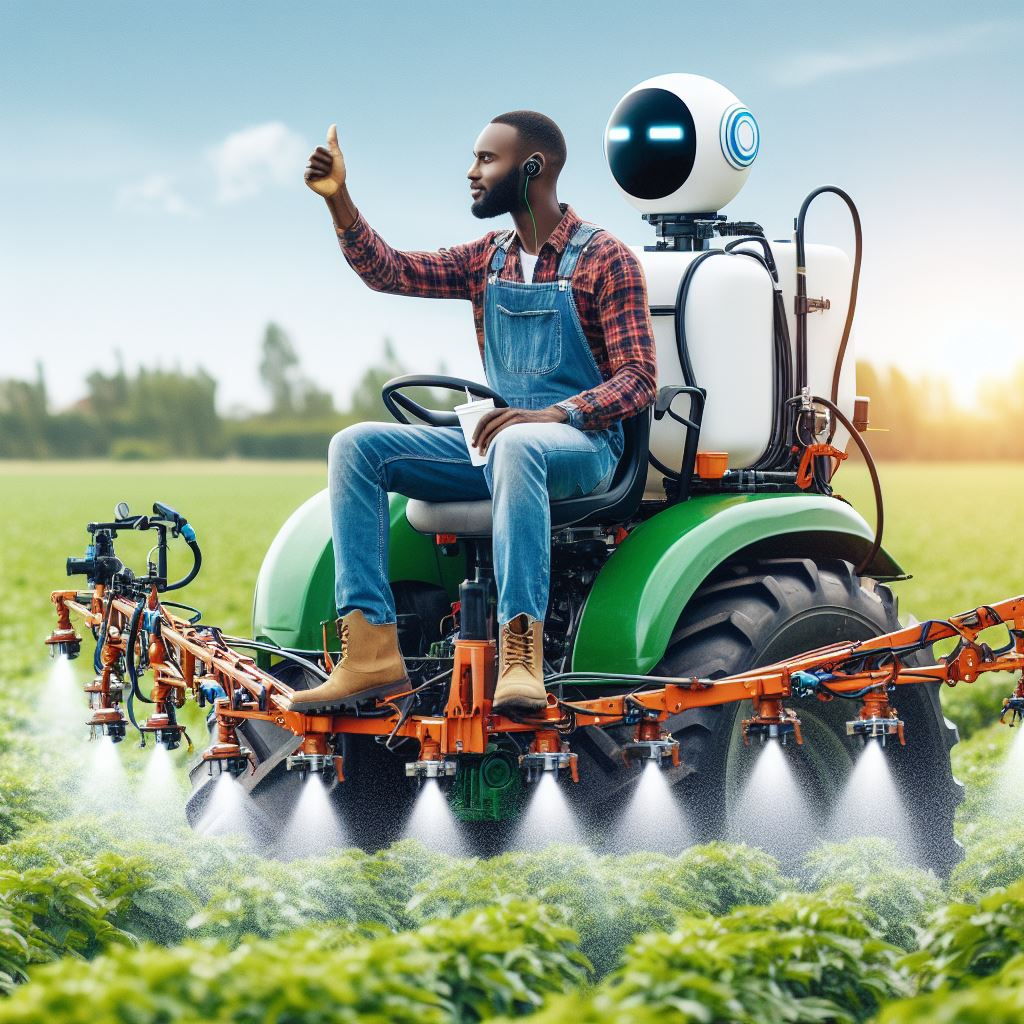
The agricultural landscape is on the brink of a revolution, not seen since the advent of synthetic pesticides in the mid-20th century. Today, we stand at the cusp of an era where artificial intelligence (AI) promises to reshape our approach to pest control, potentially reducing pesticide use by up to 90%. This seismic shift could address the critical environmental and health concerns associated with the current overuse of pesticides.
A World Awash in Pesticides
Annually, an estimated 3 million tonnes of pesticides are sprayed on crops globally, a staggering figure that highlights the scale of potential overuse. With global sales hitting $79 billion in 2022, the reliance on these chemicals is evident. Yet, the repercussions are far-reaching, contributing to pollution and impacting both ecosystems and human health.
The Dawn of Precision Spraying
The journey towards precision has already begun. Additives known as adjuvants enhance the adherence and penetration of sprays on leaves. Electrostatically charged droplets, borrowed from automotive paint-spraying techniques, have also seen some use. However, these methods are mere stepping stones compared to the potential of AI.
AI Algorithms: The Heart of Innovation
Companies like Dyson Farming and Bilberry are pioneering the use of camera arrays and image-recognition software to identify weeds and target them with pinpoint accuracy. This green-on-brown and green-on-green detection allows for a dramatic reduction in herbicide use, with Dyson Farming reporting a 70-90% decrease.
John Deere’s See & Spray
Not to be outdone, John Deere has introduced its own camera-based system, See & Spray, which uses machine learning to differentiate weeds from crops in milliseconds. The result is a significant reduction in chemical drift and run-off, with trials showing a two-thirds cut in chemical usage.
AgZen’s Precision Nozzles
AgZen, a spin-off from the Massachusetts Institute of Technology, is pushing the envelope further with nozzles that promise even greater precision. Their RealCoverage monitoring system provides real-time feedback on spray effectiveness, allowing for on-the-fly adjustments and post-application analysis.
The Impact on Farmers and the Environment
The implications of these technologies are profound. For farmers, it means a potential reduction in costs and a move away from the guesswork associated with traditional spraying methods. For the environment, it signals a hopeful reduction in pollution and a step towards sustainable agriculture.
As AI continues to advance, we can anticipate a future where food production is safeguarded, and the health of our planet is given the priority it deserves. The promise of AI in reducing pesticide load is not just a dream—it’s a vision rapidly becoming a reality.

 Life Horizons